
Plumpy
Baby feeding newborn tracker
The privacy safe baby tracker when feeding your baby. Breast feed, bottle formula and real food.

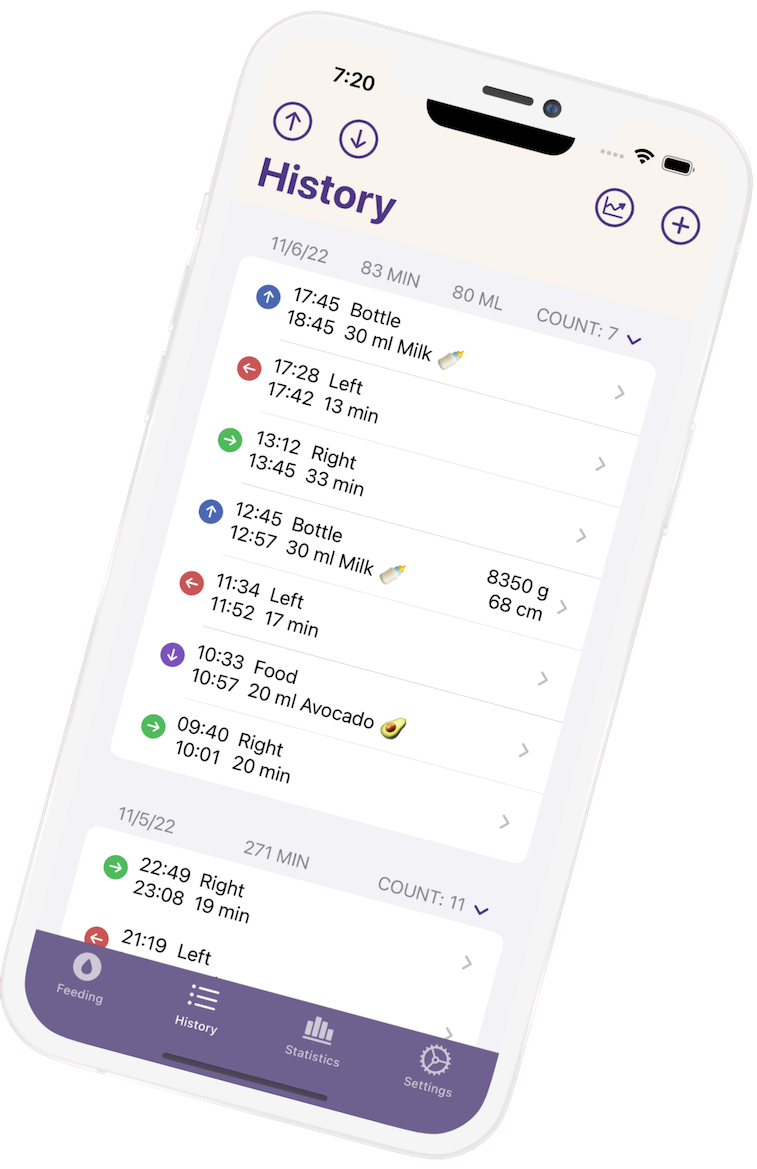
What is Plumpy?
The best and privacy safe baby tracker when breastfeeding, bottle formula feeding and feeding newborn baby. Journal food, weight mesurements, Charts, alarms and widgets.
Plumpy will help you track and log your baby's eating habits. Get detailed insight in when he/she is breastfeeding or bottle feeding. Edit or delete previous feedings at any time. Add body measurements and see charts over your baby's development.
Got a newborn baby at home?
Use Plumpy to track eating and build confidence that you are doing it right and that your baby is growing.
Privacy first
Privacy first. No information in Plumpy is shared with others. Only you got access to the data.
The app doesn't use any form of analytics or tracking.
We don't want to collect information about babies, so we don't.
Please support this by buying it instead.
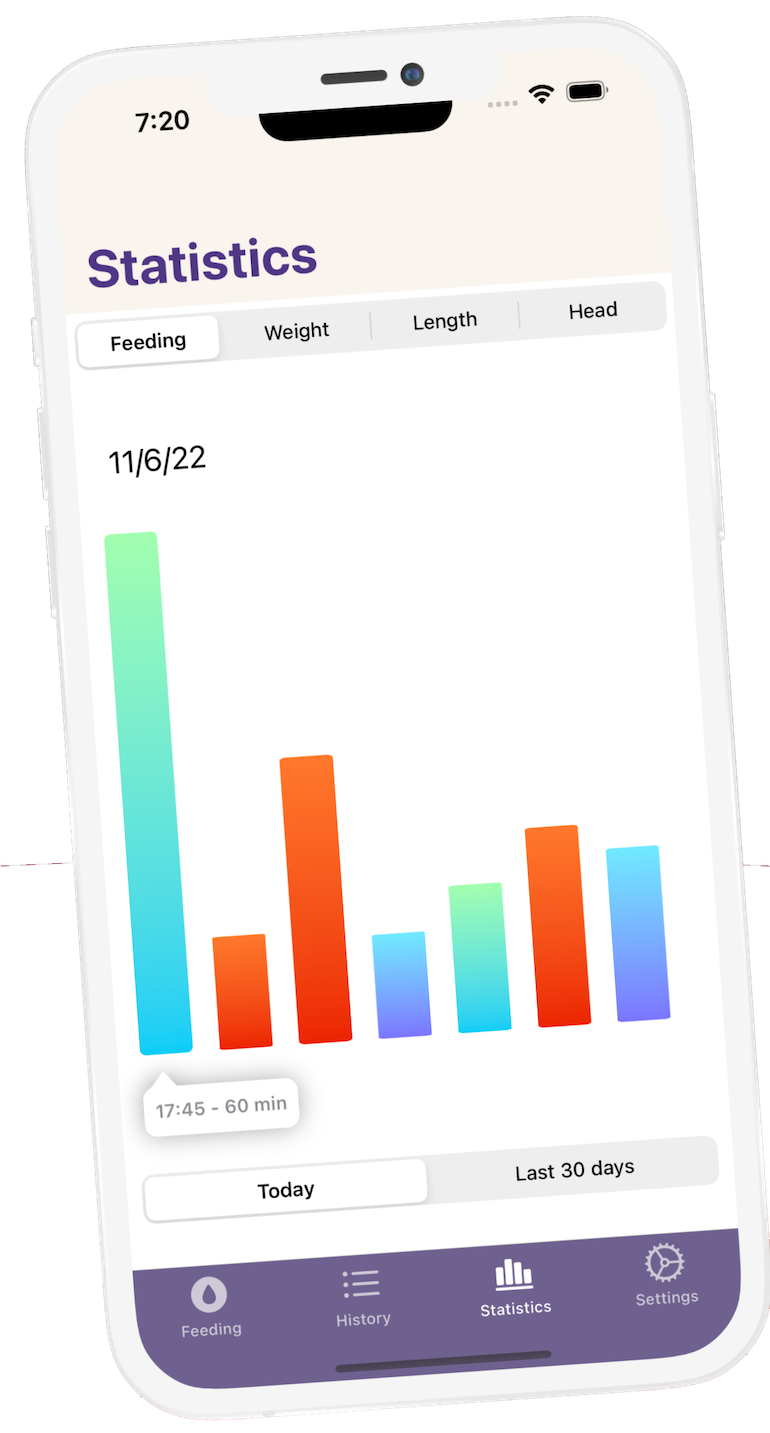
Watch your baby grow
See detailed charts over how your child is growing through milestores. How often you are feeding, which breast, bottle or food.
You can also track and watch newborn head circumference, weight and length.
Feed timer alarms
Afraid to forget to feed your baby? Use the built in alarms to get recurring notifications when to feed your baby..
Add Widgets to make it even easier
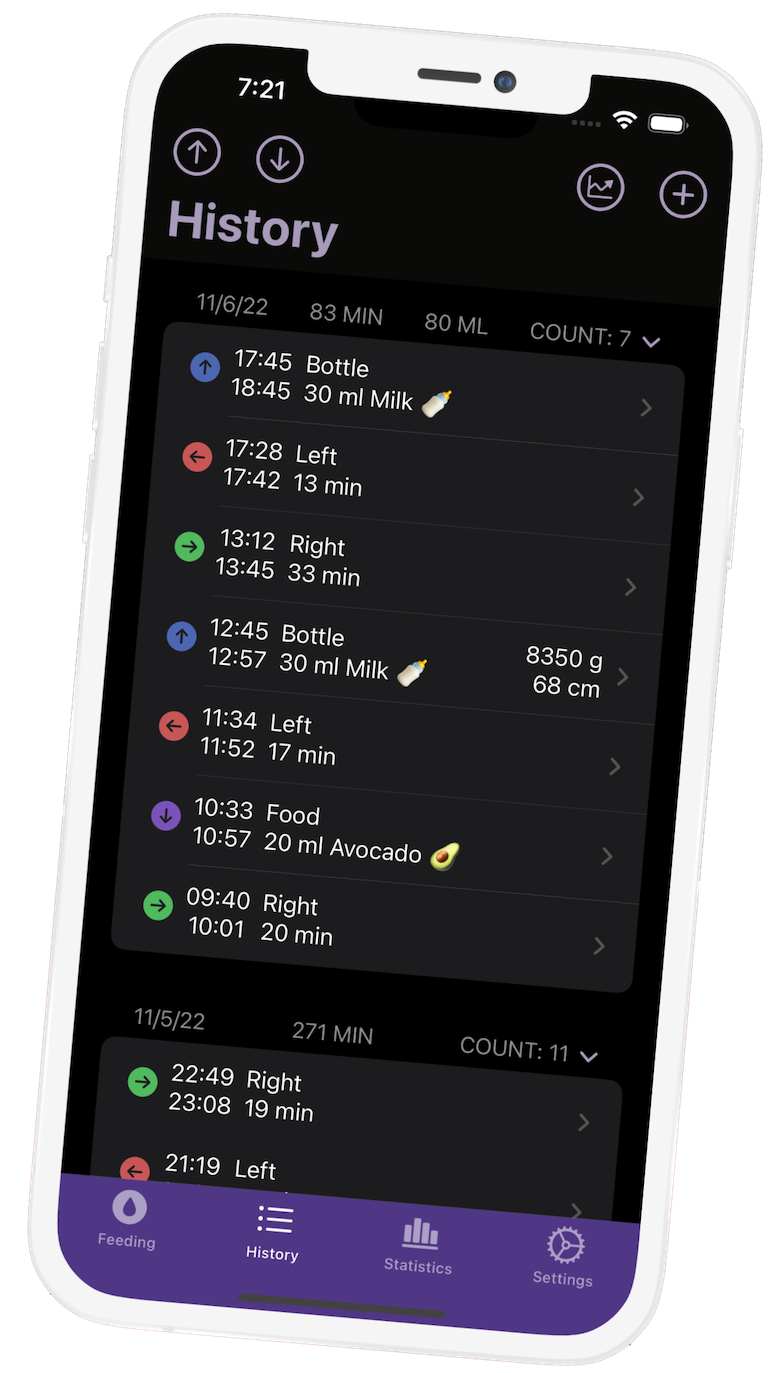
Dark mode
Does your newborn also eat at night?
We know how that feels like. Plumpy includes a beautful Dark mode you can use at night without waking the baby.
Let your newborn baby sleep better
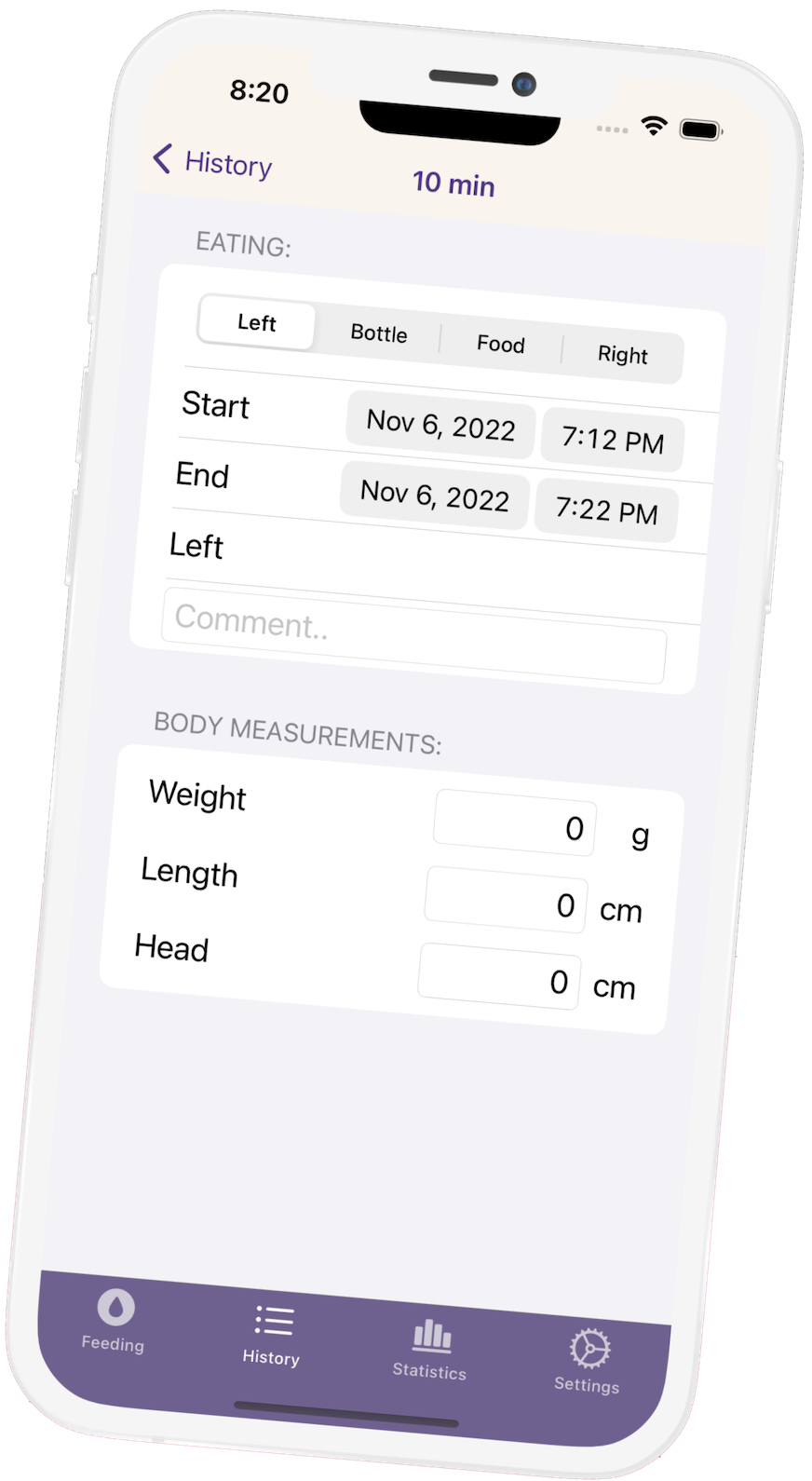
Forgot to add a feeding? Create a new or edit
Add new feedings you forgot or edit existing ones. Add body measurements like weight, height and head circumference.
You can always edit and update details later
Features
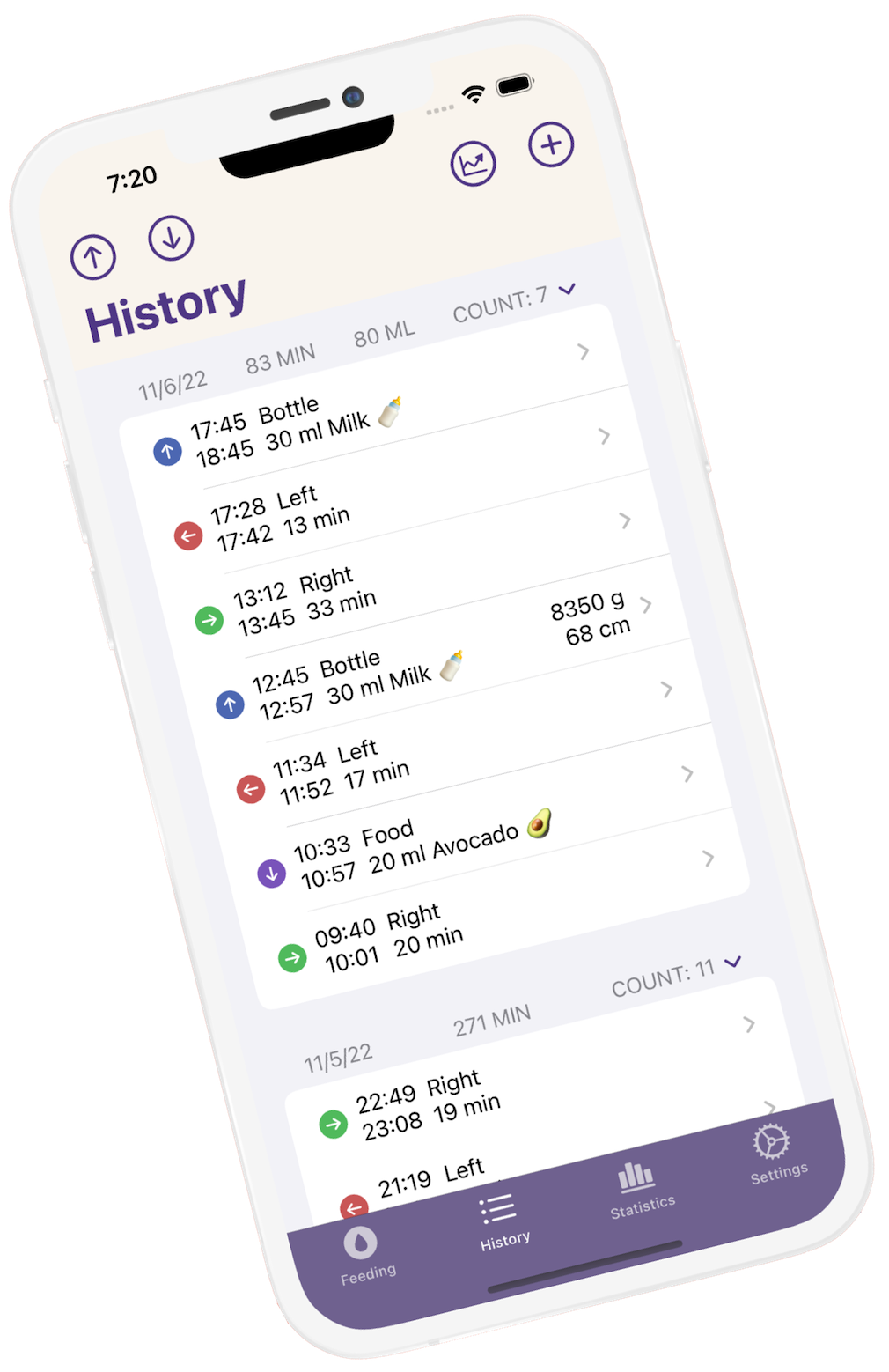
Track breastfeeding, bottle feeding and food
Track your baby's weight, length and head circumference
See detailed charts over how your child is growing
Set up recurring alarms to help remind you of feeding
Add widgets to get easy information and access
Shows you elapsed time since last feeding
Shows you the duration of the previous feeding
Helps you remember which breast is next
Edit or update previous feedings at any time
Wipe all data at any time
Dark mode
Comment on any feeding
No Ads
No Analytics tracking
Developmental milestones
Detailed overview of your baby's developmental stages
0-4 weeks (0-1 month):
- Follows objects with their eyes: Newborns begin to focus on faces and objects 20-30 cm away.
- Responds to sounds: Babies become aware of sounds and can be soothed by their parents' voices.
- Sleep: Newborns sleep a lot, up to 16-18 hours a day, but wake up for feeding and diaper changes. Sleep patterns are irregular.
4-8 weeks (1-2 months):
- Starts smiling and making sounds: Babies begin to smile in response to stimulation and make cooing sounds.
- Holds their head a bit more steady: When lifted, babies can hold their head a little more steady and controlled.
- Shows interest in faces and voices: Babies become more aware of people and sounds around them.
8-12 weeks (2-3 months):
- Can lift head and chest while lying on their stomach: Babies develop strength in their neck and back muscles.
- Follows objects more accurately with their eyes: Babies get better at tracking objects and movement in the room.
- Starts reaching for things: Babies develop motor skills and may start reaching for toys and objects.
- Sleep: Sleep patterns start to become more regulated, and babies may sleep longer at night, up to 4-6 hours at a time.
3-4 months:
- Can roll from back to stomach: Babies develop the strength and coordination to roll over.
- Explores objects with their mouth: Babies use their mouth to explore textures and tastes.
- Starts showing interest in their own body: Babies become more aware of their own hands and feet and start exploring them.
4-6 months:
- Starts sitting with support: Babies develop strength in their back and neck to sit with support.
- Can roll over in both directions: Babies become more mobile and roll from stomach to back and vice versa.
- Becomes more active and engaged with toys: Babies become more interested in toys and activities around them.
- Sleep: Babies typically sleep between 12 and 16 hours a day, including nighttime sleep and 2-3 daily naps.
6-9 months:
- Starts crawling or scooting forward: Babies develop the strength and coordination to move in various ways, such as crawling, scooting, or rolling.
- Can sit without support: Babies develop enough strength and balance to sit unsupported.
- Starts understanding simple words like "no": Babies begin to understand simple instructions and words, even if they can't talk yet.
- Starts eating solid food: Babies start eating solid food as part of their diet, usually in the form of mashed or finely chopped foods.
- Sleep: Babies typically sleep between 12 and 14 hours a day, including nighttime sleep and 2-3 daily naps.
9-12 months:
- Starts standing with support: Babies' legs get stronger and they start standing up using furniture or parents for support.
- May say simple words like "mama" and "dada": Babies develop speech skills and start saying simple words.
- Starts understanding simple instructions: Babies can follow simple instructions, like handing a toy to a caregiver.
- Can point at objects or people: Babies start pointing at objects and people to communicate what they want or are interested in.
- Sleep: Babies typically sleep between 11 and 14 hours a day, including nighttime sleep and 1-2 daily naps.
12-15 months (1 year - 1 year and 3 months):
- Starts walking with or without support: Babies develop balance and coordination to walk, either by holding onto furniture or unsupported.
- Can climb stairs with help: Babies become more mobile and can climb stairs with help from an adult.
- Shows interest in imitating others: Babies learn by observing and imitating others, especially their caregivers.
- Sleep: Babies typically sleep between 11 and 14 hours a day, including nighttime sleep and 1-2 daily naps.
15-18 months (1 year and 3 months - 1 year and 6 months):
- Becomes more independent in play and exploration: Babies start playing more independently and exploring their surroundings without constant supervision.
- May say more words and short sentences: Babies develop speech skills and may start putting together two-word sentences, like "see mama" or "give me".
- Starts showing willfulness and may test limits: Babies begin testing limits and expressing their will, which can lead to defiant behavior.
- Sleep: Babies typically sleep between 11 and 14 hours a day, including nighttime sleep and 1-2 daily naps.
18-24 months (1.5 - 2 years):
- Runs and climbs with more confidence: Babies become more confident in their motor skills and can run, jump, and climb with more control and coordination.
- Starts putting together two-word sentences: Babies continue developing their speech skills and can form simple sentences.
- Shows interest in other children and may start playing alongside them (parallel play): Babies start showing interest in playing with other children, even if they don't yet interact directly with each other.
- Sleep: Babies typically sleep between 11 and 14 hours a day, including nighttime sleep and 1-2 daily naps.
It's important to remember that every child is unique and develops at their own pace. These milestones are general guidelines and may vary from child to child. If you have concerns about your child's development, it is recommended to consult a pediatrician or other healthcare professional.
Baby feeding guides
Practical guides on newborn feeding, breastfeeding, solid food and allergy prevention.
Breastfeeding
- Breastfeeding tips for new parents
- Breastfeeding positions: 6 comfortable ways to nurse
- How long should you breastfeed?
- Pumping and storing breast milk: how long does it keep?
- Sore nipples when breastfeeding: causes and relief
- Engorged breasts, blocked ducts and mastitis: signs and what to do
- Low milk supply: signs, causes and what helps
- Weaning from breastfeeding: how to do it gently
- Breastfeeding, alcohol and tobacco
- Diet and caffeine while breastfeeding
- Breastfeeding in public: your rights and practical tips
- Breastfeeding and travel: flying, road trips and time zones
About
Plumpy is developed with love by Fredrik Lillejordet and Linn-Kjersti Sundar.2019-2026